1. Introduction
Understand the foundation: what a data catalog is, why it matters, and the business value it delivers.
1.1 What is a Data Catalog?
A data catalog is an organized inventory of all the information assets inside an organization — tables, views, dashboards, KPIs, reports, and datasets. It acts as a single source of truth that answers the most common data questions: What data do we have? What does this field mean? Who owns it? Where does it come from?
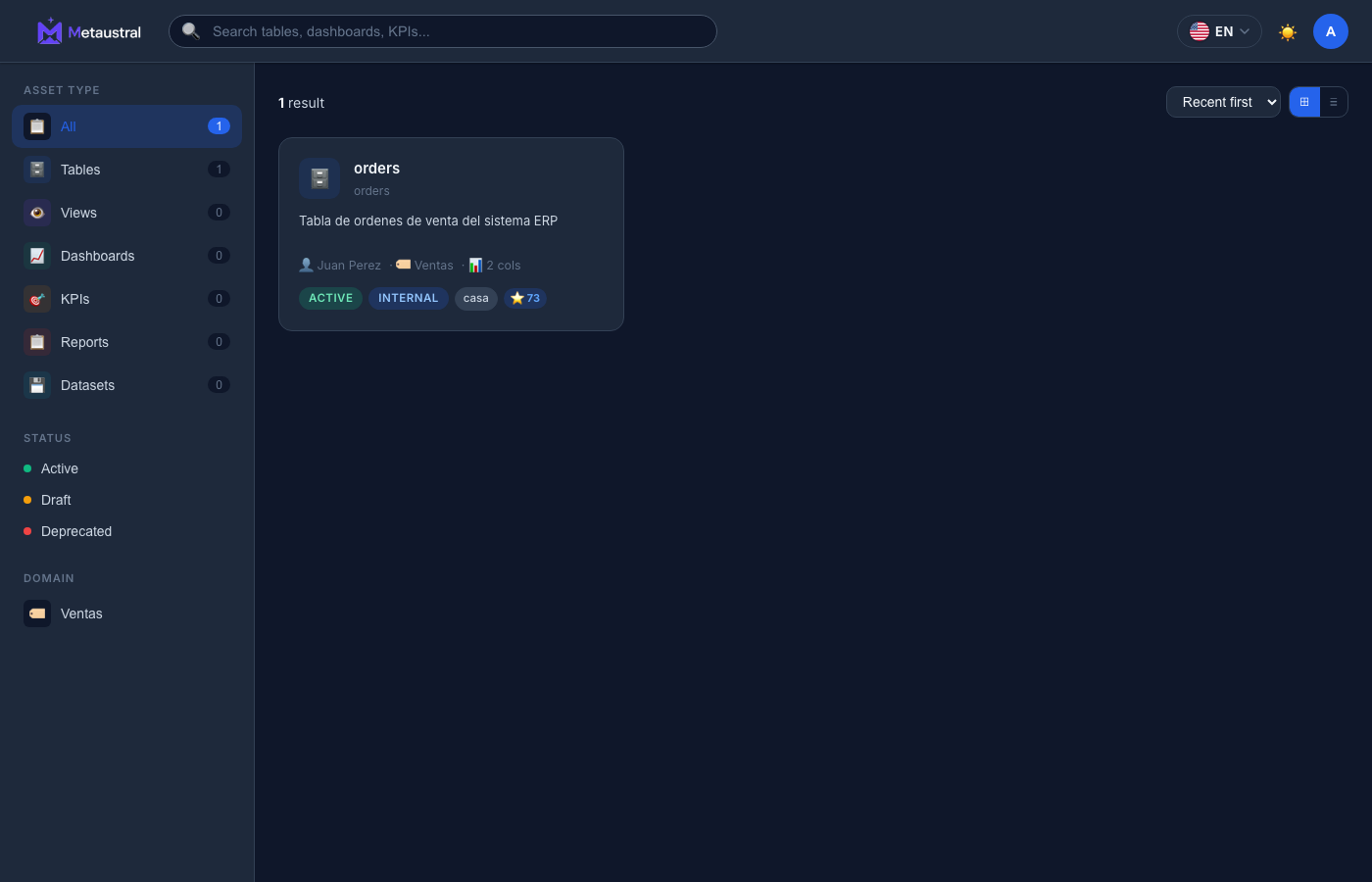
The Metaustral catalog — search, filter by type/status/domain, and see every asset with its owner, tags, sensitivity label, and data quality score.
1.2 Why Organizations Need a Data Catalog
As organizations grow, data becomes scattered across dozens of databases, dashboards, and tools. Without a catalog, teams face recurring problems:
- Data silos: each team keeps its own private copy of information.
- Duplicated effort: analysts spend 60–80% of their time finding and cleaning data instead of analyzing it.
- Broken trust: inconsistent definitions generate conflicting reports.
- Compliance risk: no visibility over sensitive data or who accesses it.
- Slow onboarding: new team members need weeks to understand the data landscape.
1.3 Benefits of Centralized Metadata Management
| Benefit | Impact |
|---|---|
| Discoverability | Anyone can find any data asset in seconds using search and filters. |
| Shared definitions | Business glossaries align teams on what each term means. |
| Governance | Ownership, sensitivity, and audit logs create accountability. |
| Lineage visibility | Understand the full journey of data from source to report. |
| Quality awareness | Data Quality Scores highlight which assets need attention. |